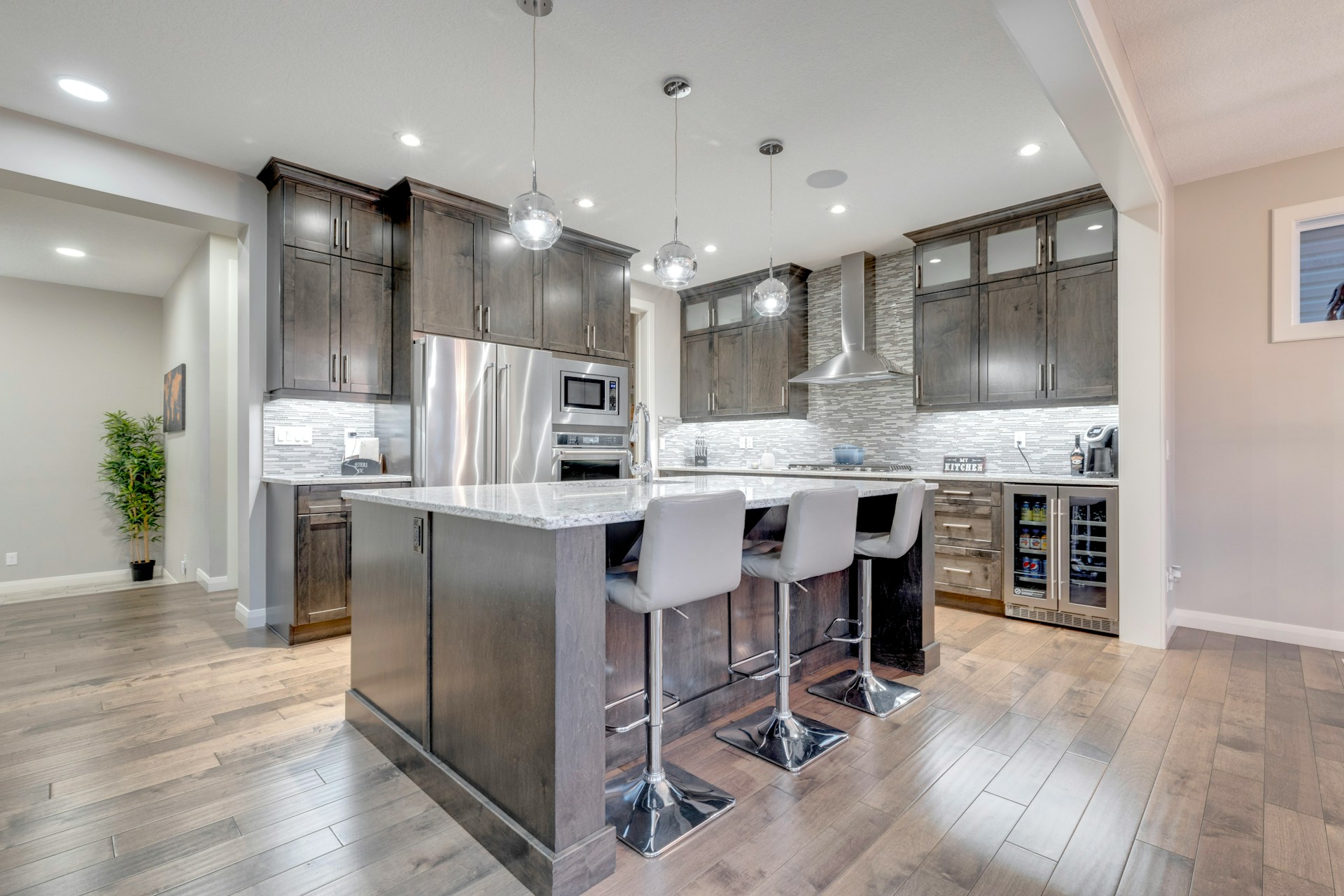
A basement family room is one of the most common and practical developments. This space is typically designed for relaxation, television viewing, and informal gatherings. Comfortable seating, soft carpeting or luxury vinyl flooring, and warm lighting help counter the naturally lower light levels found below grade. Soundproofing between floors reduces noise transfer, making the area suitable for evening use without disturbing others. Many homeowners also include built-in storage for games, electronics, and books to keep the space organised.
Legal basement suites are increasingly popular in Calgary due to housing demand. These designs require careful planning to meet Alberta building codes, including fire separation, egress windows, ceiling height, ventilation, and sound insulation. A typical legal suite includes a bedroom, bathroom, kitchen, and living area with a separate entrance. When designed correctly, it offers privacy for tenants and homeowners while providing a steady income source that can offset mortgage costs.
With more people working from home, basement offices are no longer an afterthought. Proper window placement, enlarged window wells, and light wall colours help reduce the closed-in feeling often associated with basements. Ergonomic furniture, dedicated electrical outlets, and strong internet connectivity are essential. A well-designed basement office offers quiet separation from household activity while remaining comfortable for extended work hours.
A basement guest suite provides privacy and comfort for visitors. This design typically includes a full or three-piece bathroom, built-in closets, and sound insulation. Neutral finishes and soft lighting make the space feel welcoming rather than temporary. In homes where guests stay frequently, this setup helps maintain privacy for both hosts and visitors without disrupting daily routines.
Basements offer ample space for children’s activities. Dividing the area into zones for play, homework, and reading allows the room to grow with the child. Durable flooring, washable wall finishes, and rounded furniture edges improve safety and longevity. Storage solutions such as cubbies and shelves help maintain organisation while encouraging independent cleanup habits.
A basement gym allows homeowners to exercise year-round without leaving the house. Proper flooring, such as rubber or foam mats, protects both equipment and concrete subfloors. Adequate ventilation and ceiling height are important for comfort and movement. Mirrors, sound systems, and storage for weights or yoga equipment enhance usability and motivation.
An open-concept basement allows flexibility by combining multiple functions in one large space. Lounge seating, games areas, and dining or bar zones can coexist without physical walls. Strategic lighting and furniture placement help define each area. This design is ideal for families who entertain often or need adaptable space for changing needs.
A home theatre transforms the basement into an entertainment destination. Acoustic insulation, dark wall colours, and blackout lighting improve sound and picture quality. Tiered seating or reclining chairs enhance comfort, while concealed wiring maintains a clean appearance. This type of basement is especially appealing during Calgary’s colder months.
A basement bar creates a casual gathering space for hosting friends and family. Common features include custom cabinetry, beverage refrigerators, durable countertops, and accent lighting. Depending on your needs, it can be designed as a wet bar with a sink and running water for drink preparation, or a dry bar that focuses on storage and countertop space without plumbing.
Some designs incorporate seating areas nearby to encourage conversation and relaxation. This space pairs well with entertainment or games rooms, making it both functional and inviting for social gatherings.
As families grow and change, basement suites can accommodate aging parents or adult children. These designs focus on comfort, accessibility, and independence. Features may include wider doorways, step-free layouts, private laundry, and easy access to bathrooms. Thoughtful planning supports long-term living without compromising safety.
Basements are ideal for creative pursuits that require space and storage. Whether for painting, sewing, woodworking, or music, these rooms benefit from durable surfaces, task lighting, and sound control. Custom shelving and workstations help maintain efficiency and organisation while keeping creative materials accessible.
Rather than treating laundry as a purely functional space, many homeowners upgrade basement laundry rooms for convenience. Countertops for folding, cabinets for supplies, and efficient layouts reduce daily workload. Proper lighting and ventilation improve comfort, making laundry tasks less demanding.
Basements naturally maintain cooler temperatures, making them suitable for wine storage. Wine cellars often include racking systems, temperature control, and subtle lighting. Even small spaces can be transformed into stylish storage areas that add character and functionality to the home.
A basement library offers a quiet escape from household activity. Built-in bookshelves, warm finishes, and comfortable seating create a calm atmosphere. This design appeals to homeowners who value relaxation, study, or quiet hobbies in a distraction-free environment.
Smart basement design incorporates storage without overwhelming the space. Under-stair storage, wall-mounted cabinets, and concealed closets keep belongings organised while maintaining a clean appearance. Integrated storage is particularly useful in smaller homes where space is limited.
A recreation room supports active entertainment such as pool tables, table tennis, or gaming consoles. Open layouts, durable flooring, and adequate clearance are essential. This design works well for families and social households seeking a casual, activity-focused environment.
Some homeowners choose adaptable designs that can change over time. Neutral finishes, modular furniture, and movable partitions allow the basement to shift from playroom to office, guest suite, or rental unit as needs evolve. This approach supports long-term value and usability.
Basement development in Calgary offers an effective way to enhance living space while adapting to local climate and lifestyle demands. Whether the goal is added income, family comfort, or functional expansion, thoughtful planning and quality construction play a key role in long-term satisfaction. By selecting a design that meets current needs and allows for future change, homeowners can transform their basements into valuable, comfortable extensions of their homes.
When renovating a basement in Calgary, homeowners often make mistakes that can lead to safety hazards, costly repairs, and reduced long-term value. The most common pitfalls include:
Basements in Calgary require proper waterproofing and insulation due to cold winters and moisture risks. Waterproofing includes exterior drainage, foundation sealants, and interior vapour barriers to prevent leaks and mold.
Insulation should be moisture-resistant, such as rigid foam boards or spray foam, which provide thermal protection without trapping water. Proper installation ensures energy efficiency, comfort, and a healthy basement environment.
Turn Key Homes & Renovations in Calgary, AB, is a trusted choice for homeowners seeking quality, reliability, and expertise in residential construction and renovation. They offer comprehensive services from planning and design to construction and finishing, ensuring every project is handled professionally. Their team focuses on high-quality craftsmanship, attention to detail, and efficient project management, which reduces delays and unexpected costs.
Homeowners also benefit from customized solutions designed to their lifestyle and budget, whether it’s a basement development, kitchen remodel, or full home renovation. With a strong reputation in Calgary, Turn Key Homes & Renovations combines local knowledge, licensed contractors, and a commitment to customer satisfaction, making them a dependable partner for long-term home improvement projects.
Yes, Permits are required for structural changes, electrical, plumbing, and creating bedrooms or suites. This ensures safety and compliance with Alberta building codes.
Yes, A legal suite must have a separate entrance, proper egress, fire separation, and meet ceiling height and plumbing requirements. Calgary homeowners often develop suites for additional income.
Use light wall colours, ample lighting, open layouts, mirrors, and low-profile furniture to create a sense of openness. Large windows or window wells can also help.
A wet bar includes a sink and plumbing for preparing drinks, while a dry bar focuses on storage and countertops without plumbing. Both enhance entertainment spaces.
Yes, if they meet egress window requirements, fire safety standards, and proper ventilation. Ensuring code compliance is essential for safety and insurance purposes.
Design flexible layouts with movable partitions, storage solutions, and open-concept spaces. This allows the basement to serve as a family room, office, gym, or guest area as needs change.
Renovation timelines vary by scope, but a full basement development generally takes 8-16 weeks, depending on design complexity, permits, and contractor schedules.