
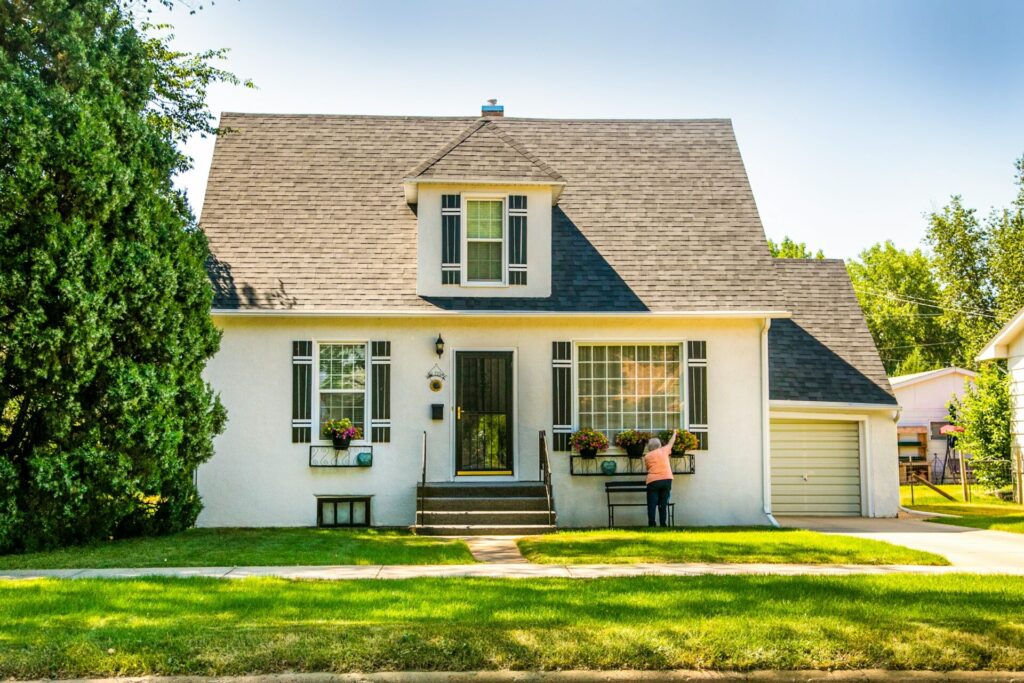
Calgary’s housing market is experiencing a transformation that presents unprecedented opportunities for homeowners and investors. The recent city-wide rezoning initiative has opened the door to middle housing Calgary development across the city, creating new possibilities to maximize property value and address housing needs.
At Turn Key Homes & Renovations, we’ve guided numerous clients through successful middle housing projects from basement suite conversions to full multi-unit developments. As Calgary’s trusted renovation and construction experts, we’re sharing our comprehensive guide to help you navigate this exciting opportunity.
What is Middle Housing?
Middle housing refers to multi-unit residential buildings that bridge the gap between single-family homes and larger apartment buildings. These include:
- Duplexes and semi-detached homes
- Triplexes and fourplexes
- Townhouses and rowhouses
- Secondary suites and laneway homes
- Garden suites and garage suites
These housing types provide gentle density in established neighborhoods while maintaining the scale and character of residential areas. They’re called “missing middle” because they’ve been largely absent from North American housing development in recent decades, creating a gap between single-family homes and apartment buildings.
The Calgary Advantage: Why Now is the Perfect Time
Calgary’s 2024 city-wide rezoning to R-CG was rescinded by City Council. Lots that received an individual RCG land use redesignation before the reversal keep that designation and retain full multiplex rights, up to an 8-plex on a 6,000 sq ft lot. Lots that had not been individually redesignated have reverted to their prior zoning, most commonly R-C2.
R-C2 still allows a fourplex. Because Calgary’s height limit caps most R-C2 builds at three stories above grade, the fourth unit typically comes from two basement suites beneath two above-grade units. This route requires a site-specific consultation with the City rather than as-of-right approval.
For homeowners, this creates opportunities to:
- Add rental units for additional income
- Create multi-generational living spaces
- Increase property value through development
- Build wealth through real estate
For investors, the advantages include:
- Strong rental demand across Calgary
- Simplified approval processes
- Multiple financing options including CMHC programs
- Higher yields compared to single-family homes
Step-by-Step Development Process
1. Property Assessment and Feasibility
Before diving into a middle housing project, it’s essential to determine what’s possible on your property:
Check your zoning: Every property in Calgary has a land use designation that dictates what can be built. Use the City’s online mapping system to confirm your current zoning:
- R-C1: Typically limited to one single-detached dwelling (with a secondary suite in some cases)
- R-C2: Allows for one or two dwelling units (e.g., a duplex or semi-detached)
- R-CG: Allows rowhouses and multiplex buildings (e.g., fourplexes).
Note: R-CG is no longer Calgary’s default zoning as of mid-2026. This designation now applies only to lots individually approved for RCG.
HGO (Housing Growth Overlay) Districts:
In addition to the standard zoning designations, Calgary has implemented Housing Growth Overlay (HGO) districts that provide additional flexibility for middle housing development:
HGO-1 (Housing Growth Overlay – Contextual):
- Allows up to 4 dwelling units per parcel
- Maximum building height of 11 metres (approximately 3 stories)
- Applies contextual design standards to ensure compatibility with surrounding neighborhoods
- Reduced parking requirements (minimum 0.5 stalls per dwelling unit)
- Streamlined approval process for qualifying developments
HGO-2 (Housing Growth Overlay – General):
- Allows up to 8 dwelling units per parcel
- Maximum building height of 16 metres (approximately 4-5 stories)
- More flexible design standards while maintaining neighborhood compatibility
- Minimum 0.5 parking stalls per dwelling unit
- Suitable for areas with good transit access and infrastructure capacity
Key HGO Advantages:
- Expedited approvals: HGO designations often allow for administrative approval rather than requiring full development permit review
- Density bonusing: Higher unit counts possible on standard residential lots
- Reduced parking requirements: Recognizes that middle housing residents often have lower car ownership rates
- Design flexibility: Standards focused on compatibility rather than rigid prescriptive requirements
How to Check HGO Status: Use the City of Calgary’s online mapping system to determine if your property falls within an HGO district. Properties with HGO overlay designations will show both the base zoning (e.g., R-CG) and the overlay district (e.g., HGO-1).
Assess your lot: Key considerations include:
- Lot size and dimensions (width is especially important)
- Access to lanes or streets
- Corner lot status (often ideal for multi-unit infill)
- Existing structures and their condition
- Utility services and capacity
Financial feasibility: Create a preliminary budget considering:
- Land value/equity position
- Construction costs ($225-300+ per square foot depending on finishes)
- Soft costs (permits, design, engineering)
- Financing costs and options
- Potential rental income or sale revenue
At Turn Key Homes & Renovations Renovations, we provide complimentary initial assessments to help you understand what’s possible on your property and the approximate costs involved.
2. Project Planning and Design
With basic feasibility confirmed, it’s time to develop a detailed plan:
Design considerations: Work with an experienced architect or designer to create plans that:
- Maximize allowable units and square footage
- Meet Calgary’s planning guidelines
- Address community context
- Incorporate quality features that appeal to renters or buyers
Key regulations to satisfy:
- Land Use Bylaw requirements (setbacks, height, lot coverage)
- Alberta Building Code standards
- Fire separation between units
- Parking requirements (minimum 0.5 stalls per unit in R-CG)
- Energy efficiency standards
Property strategy decisions:
- Build to rent or build to sell?
- Individual unit configuration and size
- Standard vs. premium finishes
- Common area responsibilities
Turn Key Homes & Renovations’s design team specializes in middle housing projects, creating spaces that maximize functionality while maintaining neighborhood character.
3. Budget Refinement and Financing
With preliminary designs complete, it’s time to refine your budget and secure financing:
Construction budget components:
- Demolition and site preparation
- Foundation and structural work
- Framing and building envelope
- Electrical, plumbing, and HVAC systems
- Interior finishes and fixtures
- Exterior works (landscaping, parking)
- Contingency allowance (15-20% recommended)
Financing options:
- Home equity lines of credit
- Construction mortgages
- CMHC MLI Select program for rental projects
- Builder financing arrangements
- Investment partnerships
4. Permitting and Approvals
Navigating Calgary’s permit system is often the most challenging part of developing middle housing:
Development Permit (DP): Addresses planning and land use aspects of your project.
- Required for most new developments
- Reviews compliance with zoning regulations and Land Use Bylaw
- Involves public notice and feedback period
- Takes approximately 3-4 months for typical middle housing projects
Building Permit (BP): Focuses on technical building safety and code compliance.
- Requires detailed construction drawings
- Includes structural, electrical, mechanical plans
- Takes approximately 1 month after DP approval
- May include separate trade permits
Turn Key advantage: Our team has extensive experience navigating Calgary’s permit system, with established relationships at City Planning and deep knowledge of approval requirements. We handle the entire permitting process on your behalf, saving you time and frustration.
5. Construction Process
With permits in hand, construction can begin:
Typical construction timeline:
- Site preparation and demolition (1-2 months)
- Foundation and services (1 month)
- Framing and structure (1-2 months)
- Rough-ins of services (1-2 months)
- Interior and exterior finishes (2-4 months)
- Final inspections and approvals (2-4 weeks)
Quality assurance:
- Regular site inspections
- Municipal inspections at key stages
- Quality control protocols
- Deficiency identification and resolution
- Final walkthrough and approval
At Turn Key Homes & Renovations, we maintain transparent communication throughout construction with our online project management software, giving clients real-time updates on scheduling, progress photos, and important milestones.
6. Final Steps and Compliance
After construction, several important steps ensure your project is legally completed:
Post-construction approvals:
- Final occupancy approval
- Development permit condition fulfillment
- Address registration
- Home warranty enrollment
For rental units:
- Business licensing requirements
- Residential Tenancy Act compliance
- Insurance updates
- Property management setup
Turn Key Homes & Renovations provides comprehensive support through these final stages, ensuring all regulatory requirements are satisfied before handing over your completed project.
Middle Housing Project Types
Secondary Suites and Basement Development
Adding a secondary suite to your existing home is often the simplest way to enter the middle housing market:
Key considerations:
- Separate entrance requirements
- Minimum ceiling heights (typically 6’5″)
- Fire separation between units
- Separate heating and ventilation systems
- Sound transmission mitigation
- Building code compliance for egress and safety
Turn Key approach: Our basement development team specializes in creating legal, comfortable secondary suites that maximize rental potential while meeting all safety requirements. We’ve completed dozens of these projects across Calgary, with a streamlined process that minimizes disruption to the main home.
Laneway Homes and Garage Suites
These detached accessory dwelling units provide privacy for both homeowner and tenant:
Key considerations:
- Maximum allowable size (typically 75% of main house footprint)
- Height restrictions and privacy setbacks
- Parking configurations
- Utility connections
- Foundation requirements
- Winter design considerations
Turn Key approach: Our laneway home designs balance maximize square footage while respecting neighborhood character, with durable construction methods that ensure these investments stand the test of time.
Duplex and Semi-Detached Homes
Converting a single-family home to a duplex or building a new semi-detached structure
Key considerations:
- Side-by-side vs. up-down configuration
- Separate utilities and services
- Sound attenuation between units
- Private outdoor spaces
- Parking layout
- Shared maintenance responsibilities
Turn Key approach: Our duplex designs create the feel of single-family homes within multi-unit structures, with thoughtful space planning and quality finishes that appeal to discerning renters and buyers.
Townhouses and Rowhouses
Multi-unit attached housing that maximizes density while maintaining private entrances:
Key considerations:
- Land assembly requirements
- End unit vs. interior unit design
- Common walls and fire separation
- Property maintenance coordination
- Outdoor space allocation
- Parking integration
Turn Key approach: We design townhouse developments that balance privacy and community, with attention to sound separation and quality construction that exceeds building code minimums.
Tri-plexes and Four-plexes
The highest density middle housing option for standard residential lots:
Key considerations:
- Complex layout and design requirements
- Enhanced fire safety codes
- Multiple services coordination
- Parking and access configuration
- Sound isolation between units
- Common area maintenance
Turn Key approach: Our multi-unit designs emphasize efficient space planning and quality construction, creating buildings that enhance neighborhoods while providing solid returns on investment.
Costs, Returns, and Investment Analysis
Understanding the financial aspects of middle housing development is crucial for success:
Construction Costs
Based on recent Turn Key projects, typical middle housing construction costs in Calgary (as of 2025):
| Project Type | Size Range | Cost Range (per sq ft) | Total Project Range |
|---|---|---|---|
| Secondary Suite | 600-900 sqft | $155-195 | $110K-180K |
| Laneway Home | 500-880 sqft | $500-600 | $280K-450K |
| Duplex Conversion | 1800-2400sqft | $150-225 | $275K-540K |
| New Duplex | 1800-2000sqft | $300-425 | $540K-960K per side |
| Fourplex/4 Bsmt suites | 6,800 - 7200 sqft | $280-350 | $2M - 2.3M |
Note: Costs include standard finishes and assume normal site conditions. Unique challenges, premium finishes, or complex designs may increase costs.
Return on Investment
Middle housing projects can deliver returns through:
- Rental income
- Property appreciation
- Equity building
- Eventual sale
Current Calgary market metrics (January 2025):
- Average rental yield: 5.8% (range: 4.9-6.7% depending on location and property type)
- Annual price appreciation: 11.7%
- Combined potential return: 17.5%
Sample ROI Scenario: Four-plex with 4 Basement suites Development
- Purchase price (older single-family home): $750,000
- Development cost: $2,200,000
- Total investment: $2,950,000
- Monthly rental income (4 units): $14,000-18,000
- Annual gross rental income: $168,000 – 216,000
- Annual operating expenses (35%): $58,800-75,600
- Net operating income: $109,200 – 140,400
- Cash-on-cash return: 7.5-9.5% (with 30% down payment)
These numbers above cannot be guaranteed to be accurate as each project has it’s own variables. They are not meant to be used to make financial decisions.
Financing Strategies
Several financing approaches can make middle housing development accessible:
Traditional financing:
- Construction loans converting to permanent mortgages
- HELOC for smaller projects
- Conventional investment property financing
Government programs:
- CMHC MLI Select for multi-unit rentals
- Secondary Suite Incentive Program
- Energy efficiency rebates and incentives
Investment structures:
- Joint ventures
- Limited partnerships
- Real estate investment groups
Turn Key partners with financial specialists who understand middle housing development and can help structure the optimal financing approach for your project.
Why Choose Turn Key Renovations for Your Middle Housing Project
Developing middle housing requires specialized expertise and careful project management. Turn Key Homes & Renovations Renovations offers comprehensive support throughout the process:
Our Middle Housing Advantages
- Established expertise: Since 2014, we’ve completed dozens of middle housing projects across Calgary, from basement suites to multi-unit developments.
- Full-service approach: We handle every aspect from initial concept through to completion, including design, permitting, construction, and compliance.
- Quality assurance: As members of ANHWP, RenoMark, CHBA, Calgary BILD, and BBB, we maintain the highest industry standards, backed by our 5-year workmanship guarantee.
- Financial protection: Our Provincial Prepaid Contractor License (#346484) means your deposits are guaranteed, and we offer optional third-party $100,000 comprehensive warranty through Alberta New Home Warranty Program.
- Transparent communication: Our online project management software provides real-time access to schedules, progress photos, change orders, and communications throughout your project.
Client Success Stories
Fraser & Lisa – Lakeview, Calgary Transformed a single-family bungalow into a modern duplex with basement suites, creating four rental units that generate over $8,000 monthly income.
Neil & Shannon – Lake Sundance, Calgary Multi-phase project including basement development, exterior renovation, and main floor transformation to create a legal secondary suite while updating their primary residence.
Marcello & Alisha – Chinook Park, Calgary Complete home transformation including adding a garden suite, creating a multi-generational living solution that accommodates extended family while maintaining privacy.
Getting Started With Your Middle Housing Project
Ready to explore middle housing development for your property? Turn Key Homes & Renovations Renovations offers a streamlined process to get started:
- Initial consultation: We’ll meet at your property to discuss your goals, assess feasibility, and explore potential options.
- Concept development: Our design team will create preliminary plans and budgets to help you visualize the possibilities.
- Proposal and agreement: We’ll provide a detailed project proposal with transparent pricing and timelines.
- Design and permitting: Our experts will handle all aspects of design development and permitting.
- Construction and completion: Our experienced team will build your project to the highest standards, with regular updates throughout.
Contact Turn Key Today
Take the first step toward your middle housing project by scheduling a complimentary consultation:
Turn Key Homes & Renovations
Phone: 587-805-5235
Email: [email protected]
Website: www.Turnkeyrenovations.ca
Office: #115 – 1925 18 Ave NE, Calgary, AB T2E 7T8
With Turn Key’s expertise and Calgary’s supportive regulatory environment, there’s never been a better time to explore middle housing development. Let us help you turn this opportunity into reality.
This guide is provided for informational purposes based on current regulations and market conditions as of March 2025. Specific project requirements, costs, and returns may vary. Turn Key Homes & Renovations Renovations recommends professional consultation for your unique property and investment goals.