
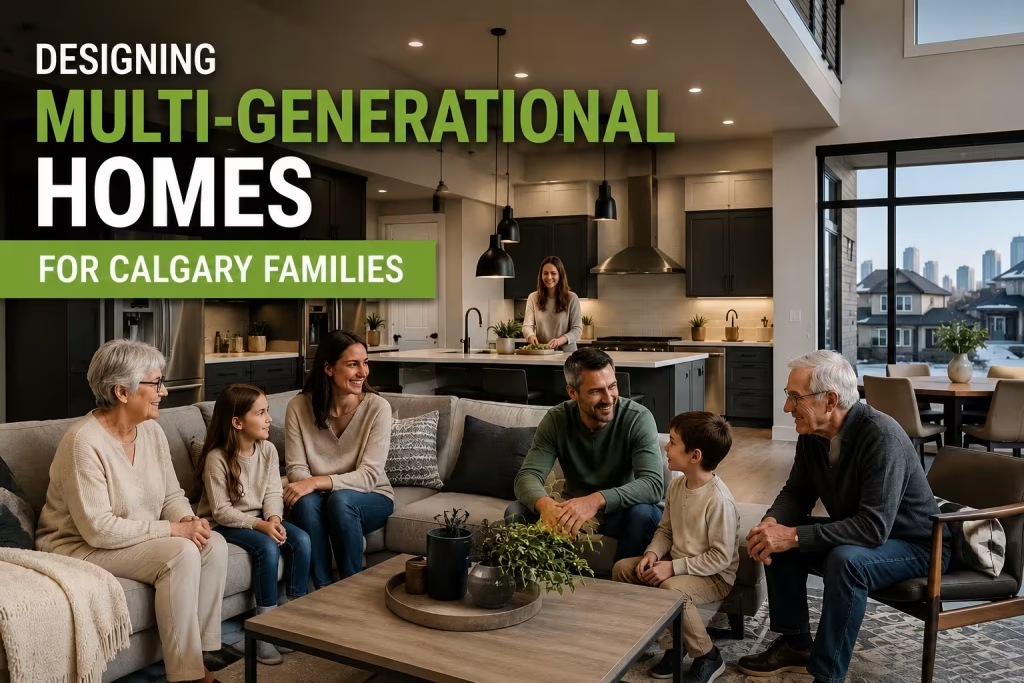
Calgary’s housing market, combined with shifting family values, an aging baby boomer population, and the rising cost of independent living, has made multi-generational living one of the fastest-growing residential trends in the city. Across neighbourhoods from the mature inner-city communities of Hillhurst and Renfrew to the sprawling new suburbs of Livingston and Seton, families are rethinking what home means, and more importantly, who it should be designed for. The old model of each generation living separately, connected only by Sunday dinners and phone calls, is giving way to something more integrated, more intentional, and for many Calgary families, more financially and emotionally sustainable.
Designing multi-generational homes is not simply a matter of adding a basement suite or converting a spare bedroom. It is a comprehensive architectural, legal, financial, and relational undertaking that requires careful planning across every dimension of how a property is conceived, permitted, built, and lived in. The decisions made at the design stage, the placement of entrances, the thickness of shared walls, the location of a laundry room, the width of a hallway, ripple outward for decades, shaping whether the arrangement feels like a gift or a compromise every single day.
Beyond economics, the emotional case for multi-generational living is compelling. Children who grow up in close proximity to grandparents develop stronger intergenerational bonds and benefit from the additional care, mentorship, and cultural transmission that proximity allows.
What Are Multi-Generational Homes?
A multi-generational home is a single property designed to comfortably house two or more generations of a family, grandparents, parents, and children all under one roof, or in connected units on the same lot. Unlike simply sharing a house, a well-designed multi-generational home provides each generation with a degree of autonomy, privacy, and independence while retaining the closeness and cost-sharing benefits of living together.
For Calgary families, the appeal is strong. Rising housing costs in communities like Evanston, Mahogany, or Silverado make it difficult for young families to own independently. Meanwhile, aging parents may face isolation in standalone homes and rising care costs. Multi-generational living addresses both problems simultaneously. Before committing, families should honestly assess relationship dynamics, lifestyle differences (sleep schedules, noise tolerance, shared versus separate cooking), and long-term care expectations to ensure the arrangement will work.
What Calgary Zoning Laws Govern Multi-Generational Homes?
Calgary’s zoning bylaws directly shape what you can build. The City of Calgary allows secondary suites (basement suites, garden suites, and carriage houses) in most residential zones, but the rules vary significantly by community and lot type.
Under the City of Calgary’s Land Use Bylaw 1P2007, and updated with recent R-CG (Residential Grade-Oriented Infill) and RC1/RC2 zoning changes, many communities now permit legal secondary suites as well as backyard garden suites. In 2023, the Province of Alberta also moved to make secondary suite approvals easier and faster, removing some of the previous restrictions that applied in certain districts.
Considerations include:
- Suite registration:
Secondary suites must be registered with the City of Calgary and pass inspection to be legal and insurable.
- Separate entrances:
Most legal suites require a separate, private entrance for each unit.
- Egress windows:
Basement suites require properly sized egress windows in all sleeping areas as per Alberta Building Code.
- Fire separation:
A minimum one-hour fire separation between units is required in most configurations.
- Parking:
Additional off-street parking is often required for a secondary suite.
Working with a Calgary-based architect or designer familiar with the local bylaw is essential, as regulations change frequently and vary community by community.
How Do Multi-Generational Homes Balance Privacy and Connection?
The greatest design challenge in multi-generational homes is balancing togeth\erness with privacy. Too much separation defeats the purpose; too little creates conflict. The solution lies in architectural zoning, dividing the home into distinct “domains” with carefully designed transition spaces.
Effective strategies include:
Vertical separation places one generation on the upper floor and another on the main or lower level, with shared common areas like the kitchen or living room in between. This works well in Calgary’s popular two-storey infill homes.
Horizontal separation uses a main house and a separate attached or detached suite at the back or side of the property. Garden suites, increasingly common on Calgary’s newer lots, offer complete independence with proximity.
Acoustic design is often underestimated. Insulating party walls, using staggered stud walls, mass-loaded vinyl, and resilient channels between shared floors dramatically reduces sound transmission and is far cheaper to do during construction than to retrofit later.
Separate outdoor spaces, a private patio for a grandparent suite or a separate backyard zone, give each household a sense of territory without requiring physical distance.
The shared kitchen question is one of the most important to settle early. Many multi-generational home designs now include a full kitchen in the secondary suite plus a smaller prep kitchen or kitchenette in a shared entertaining area, giving everyone autonomy while still creating spaces where the family naturally gathers.
What Accessibility Features Do Multi-Generational Homes Need?
Designing for aging in place is not just about installing grab bars, it’s about anticipating the full arc of physical change over ten to twenty years and building flexibility into the home from the start.
Alberta’s building code sets minimum accessibility requirements, but for a multi-generational home hosting elderly parents or grandparents, going beyond code is worth every dollar. Universal design principles, the same ones behind accessible home design, benefit everyone in the home, not just seniors, by making spaces usable regardless of age or mobility level.
Critical features to incorporate include:
No-step or low-step entries:
A covered, zero-threshold entry with a gentle ramp or level walkway protects against Calgary’s freeze-thaw cycles and eliminates the risk of falls in winter.
Wider doorways and hallways:
Standard doorways are 32 inches; 36-inch-wide doors accommodate walkers and wheelchairs without requiring renovation later. Hallways of 42 to 48 inches allow for comfortable two-person passage and mobility aids.
Main-floor bedroom and bathroom:
Even if a senior is fully mobile today, designing their suite so all essential living can happen on one level removes any future stair dependency entirely.
Curbless (roll-in) showers:
A curbless shower with a built-in bench, handheld showerhead, and properly placed blocking in the walls (for future grab bar installation) is far safer than a tub for older adults.
Lever handles and rocker light switches:
Simple but impactful, lever handles and rocker switches are easier for arthritic hands than knobs and small toggle switches.
Smart home integration:
Voice-activated lighting, thermostats, and door locks allow elderly residents to manage their environment independently and give family members remote visibility for safety.
What Are the Best Layouts for Multi-Generational Homes in Calgary?
Calgary’s residential architecture has evolved rapidly to accommodate multi-generational living. Several layouts have proven especially effective in the city’s context:
Bungalow with legal basement suite:
The classic Calgary bungalow, abundant in inner-city communities, lends itself naturally to conversion. A fully above-grade front entry, separate rear entry, full ceiling height in the basement, and adequate window wells make for comfortable, legal suites. Main-floor living for mobility-limited parents and lower-level independent space for adult children works especially well in this format; the basement development ideas that perform best in these arrangements prioritize ceiling height, natural light, and a private entrance from the outset.
Two-storey with main-floor in-law suite:
Newer builds in communities like Livingston, Glacier Ridge, or Cornerstone often include a “flex room” or main-floor bedroom suite that can function as an in-law suite. Adding a kitchenette and accessible bathroom to this space during construction is far less costly than retrofitting later.
Front-attached or detached garage conversion to garden suite:
Calgary’s updated regulations around garden suites make converting or building above or beside a detached garage a popular option. These provide the greatest degree of separation and independence, ideal when privacy is the top priority.
Duplex-style infill:
Side-by-side infill duplex homes, increasingly common in Calgary’s inner-city intensification zones, allow two separate legal dwellings on a single lot. While technically separate addresses, families can design them with connecting interior doors and shared backyard spaces to function as a coordinated whole.
Laneway homes:
Though less common than in Vancouver, Calgary’s Garden Suite program is expanding. A laneway-facing secondary home on a larger inner-city lot provides maximum independence and can serve as a long-term rental after the need for multi-generational living changes.
How Much Do Multi-Generational Homes Cost to Build in Calgary?
Multi-generational home projects in Calgary span a wide cost range depending on whether you’re retrofitting an existing home, building from scratch, or purchasing a new build with suite-rough-in included.
Retrofitting an existing home to add a legal basement suite in Calgary typically costs between $80,000 and $180,000 depending on existing conditions, ceiling heights, scope of finishing work, and permit and inspection fees. Older homes with low basement ceilings may require underpinning, which adds significantly to cost.
New construction of a two-unit home with a full legal suite built from the ground up ranges from $550,000 to over $1 million for the build alone, not including land, depending on size, finishes, and location.
Garden suite construction on an existing property runs $250,000 to $500,000 for a modest, fully independent unit including site servicing, foundation, and connection to existing utilities.
Beyond construction, families should budget for:
- City of Calgary permits and development fees
- Potential upgrades to electrical panels (200-amp service is typically needed for a suite)
- Separate utility metering (optional but often desirable for shared-cost clarity)
- Legal and estate planning costs to formalize any ownership or cost-sharing arrangements
Mortgage financing for multi-generational homes has also evolved. Several Canadian lenders, including CMHC-insured products, now allow rental income from a registered secondary suite to be used in qualifying income calculations, which can meaningfully improve purchasing power.
Which Shared Spaces Work Best in Multi-Generational Homes?
Shared spaces are where the investment in multi-generational living pays off emotionally. Designing them well means anticipating the rhythms of different generations while creating places that feel genuinely inviting rather than compromised.
The kitchen and dining area remain the most important shared spaces in most family configurations. A large island that accommodates multiple cooks, an adjacent dining table that extends for Sunday dinners, and a layout that doesn’t force one household to pass through the other’s private space to reach shared areas all matter.
Outdoor spaces deserve the same design attention as interior rooms. A covered deck accessible from the main house, with a defined but connected outdoor area for the suite, gives each household a sense of ownership while keeping the family connected. In Calgary’s climate, a sheltered, south-facing outdoor space extends the usable season significantly.
Laundry is a practical point of contention in multi-generational homes. Designing two separate laundry locations eliminates scheduling friction and is more valuable than it sounds. If the suite is smaller, a dedicated laundry closet within the suite is far preferable to a shared arrangement.
A shared mudroom with designated storage zones for each household manages the clutter of Calgary’s active families, skis, hockey equipment, bikes, and boots, without the chaos of a single dumping ground.
What Mistakes Should You Avoid with Multi-Generational Homes?
Even well-intentioned multi-generational home projects go wrong in predictable ways. Understanding these pitfalls before you build saves money, relationships, and regret.
Building an illegal suite:
The cost savings of skipping permits are rarely worth it. Illegal suites can invalidate home insurance, create liability if a tenant is injured, complicate resale, and result in orders to vacate from the City of Calgary.
Underestimating acoustic separation:
Standard interior wall construction is not designed for sound isolation between dwellings. Sound transmission between units is consistently the top complaint in multi-generational homes that didn’t invest in acoustic treatment during construction.
Neglecting separate outdoor access:
Designing a suite where residents must pass through shared or private areas to access the outdoors creates friction. Every unit should have direct, independent exterior access.
Over-personalizing to current needs:
A home designed precisely for today’s family configuration, a specific wheelchair width, a very particular age cohort, may not serve the family in ten years. Building adaptability in rather than optimizing rigidly for current circumstances gives the home lasting utility.
Skipping the legal and financial agreements:
Physical proximity amplifies both the best and worst aspects of family relationships. A clear, written agreement about costs, decisions, and exit provisions is not a sign of distrust, it is an act of respect for everyone involved.
Why Choose Turnkey Homes and Renovations for Designing Multi-Generational Homes for Calgary Families?
Turnkey Homes and Renovations is a strong choice for designing multi-generational homes because they understand the importance of balancing privacy, comfort, and shared living spaces. The team focuses on creating practical layouts that allow different generations to live together without feeling crowded or restricted. This includes features like separate entrances, private suites, soundproofing, and accessible design for elderly family members, ensuring that every age group’s needs are thoughtfully addressed.
In addition, they bring local expertise and a customized approach to every project, which is especially valuable for Calgary families dealing with specific climate conditions and building regulations. They work closely with homeowners to turn their vision into reality while maintaining quality, functionality, and long-term value. Their turnkey service also simplifies the entire process, handling everything from design to construction, so families can enjoy a smooth and stress-free experience.
Frequently Asked Questions
Can existing properties be converted into Multi-Generational Homes?
Yes, many existing homes can be renovated into Multi-Generational Homes by adding basement suites, separate entrances, and additional living areas.
Do Multi-Generational Homes require special design expertise?
Yes, designing Multi-Generational Homes often requires professional expertise to balance privacy, functionality, and comfort for different age groups.
How long does it take to build Multi-Generational Homes?
The timeline for Multi-Generational Homes depends on the project size and complexity, but it generally takes several months from design to completion.
Do Multi-Generational Homes in Calgary increase property value?
Yes, Multi-Generational Homes in Calgary can increase property value because they offer versatile living arrangements that appeal to a wide range of buyers.
Are Multi-Generational Homes good for long-term living?
Yes, Multi-Generational Homes are ideal for long-term living because they adapt to changing family needs and provide ongoing support for all generations.
Can Multi-Generational Homes be customized by Turnkey Homes and Renovations?
Yes, Turnkey Homes and Renovations fully customizes Multi-Generational Homes to match each family’s unique lifestyle, preferences, and future plans.