Sustainable Home Builders Calgary | LEED Certification Guide
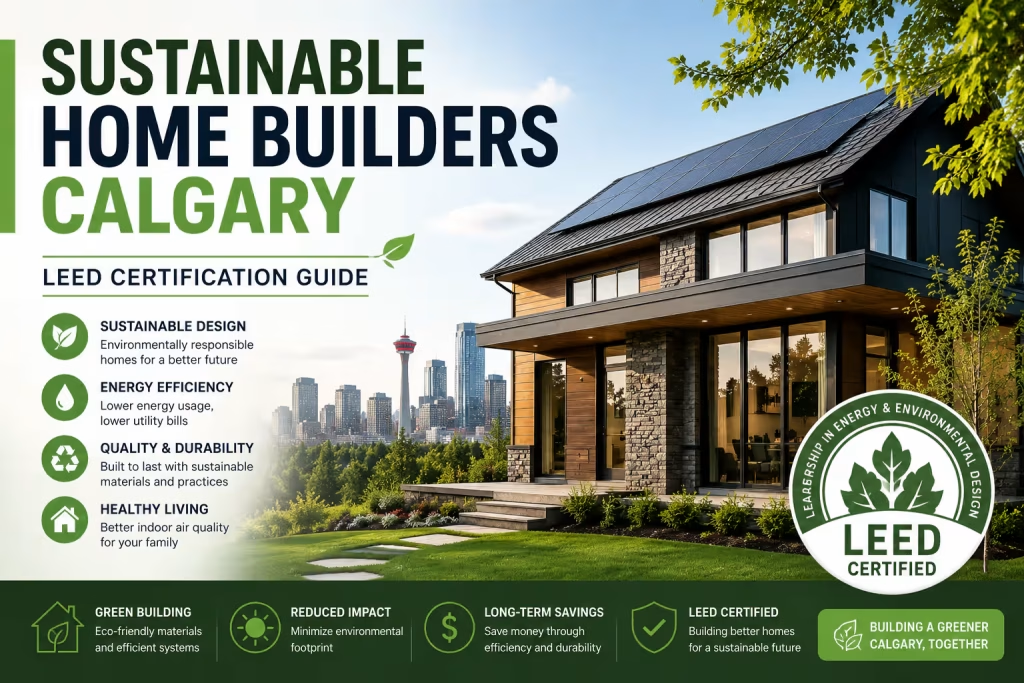
Sustainable Home Builders Calgary | LEED Certification Guide
Sustainable housing is no longer an optional trend in modern construction, it is becoming a practical necessity, especially in cities like Calgary. With rising energy costs, extreme seasonal temperatures, and growing environmental concerns, homeowners are increasingly shifting toward homes that are efficient, durable, and environmentally responsible.
Sustainable home builders focus on creating houses that reduce energy consumption, improve indoor comfort, and minimize environmental impact. Instead of relying on traditional construction methods, they use advanced insulation systems, smart technologies, and eco-friendly materials to build homes that perform better over time.
One of the most recognized standards guiding this movement is LEED certification. It provides a structured way to measure how “green” a home is based on energy use, water efficiency, materials, and overall environmental impact. Understanding both sustainable home building and LEED certification helps homeowners make smarter, long-term investment decisions.
What Is Sustainable Home Building?
Sustainable home building is a construction approach that minimizes a home’s environmental impact throughout its entire lifecycle, from the raw materials sourced during construction to the energy it consumes over decades of use. It goes well beyond simply installing solar panels or choosing recycled countertops. A genuinely sustainable home is designed, built, and operated as an integrated system.
In practice, sustainable home building in Calgary typically means:
- Using energy-efficient building envelopes that reduce heating and cooling loads
- Installing high-performance windows and insulation suited to Alberta’s extreme climate
- Incorporating renewable energy systems such as solar photovoltaic panels
- Reducing water consumption through low-flow fixtures and greywater systems
- Selecting materials with low embodied carbon and minimal off-gassing
- Positioning the home to maximize passive solar gain during Calgary’s cold winters
- Planning for indoor air quality through mechanical ventilation systems like HRVs
The result is a home that performs better, costs less to run, and provides a healthier living environment than a code-minimum build.
What Is LEED Certification?
LEED, Leadership in Energy and Environmental Design, is a green building certification program developed by the U.S. Green Building Council (USGBC) and administered in Canada by the Canada Green Building Council (CaGBC). It is the world’s most widely used green building rating system, covering over 185 countries and more than 100,000 certified projects.
LEED provides a point-based framework for evaluating a building’s sustainability across multiple categories. The more points earned, the higher the certification level. It is not a prescriptive standard that tells builders exactly what to do, instead, it offers a flexible system where builders can pursue different combinations of strategies depending on the project’s priorities, budget, and location.
The Four Levels of LEED Certification
LEED certification is awarded at four levels based on the total number of points earned out of a possible 110:
LEED Certified: 40–49 points. The entry-level designation, confirming the home meets a meaningful baseline of green performance across multiple categories.
LEED Silver: 50–59 points. A solid mid-tier certification demonstrating above-average performance and commitment to sustainability.
LEED Gold: 60–79 points. A high level of achievement that typically requires significant investment in energy efficiency, water conservation, and material selection. Most serious green builders in Calgary aim for Gold as their baseline target.
LEED Platinum: 80+ points. The highest designation, awarded to buildings that represent the leading edge of sustainable design and construction. Platinum homes in Calgary are rare and typically incorporate advanced technologies like net-zero energy systems, triple-pane windows throughout, and highly optimized mechanical systems.
LEED for Homes vs. LEED BD+C
There are multiple LEED rating systems depending on the type of building and project scope. The two most relevant to Calgary residential projects are:
LEED for Homes: Specifically designed for single-family residences and low-rise residential buildings up to three stories. It accounts for the unique characteristics of home construction, including systems like HVAC, appliances, and landscaping that are typically excluded from commercial green building programs.
LEED BD+C (Building Design and Construction): Applied to larger residential developments, mid-rise and high-rise buildings, or mixed-use projects. Some Calgary condo developments and townhome communities pursue BD+C rather than LEED for Homes.
How the LEED Certification Process Works?
LEED certification follows a structured process from design through construction and final verification. Understanding this process helps homeowners and builders plan effectively and avoid common pitfalls.
Step 1: Register the Project
The first step is registering the project with the Canada Green Building Council. Registration opens access to LEED Online, the platform where documentation is submitted and reviewed. Registration also establishes the LEED rating system version to be used, which matters because credit requirements evolve between versions.
Step 2: Engage a LEED Accredited Professional
While LEED certification does not legally require a LEED AP, working with one is strongly recommended, and earns an Innovation credit. A LEED AP is a professional who has passed rigorous examinations demonstrating expertise in the LEED system. They help the project team identify which credits to pursue, prepare documentation, and navigate the review process efficiently. In Calgary, a growing number of architects, builders, and consultants hold LEED AP credentials.
Step 3: Integrate LEED into the Design Process
LEED works best when sustainability is integrated into the design from the beginning, not added as an afterthought. Early-stage decisions, site selection, building orientation, massing, and envelope design, have the greatest impact on performance and the lowest cost of implementation. Trying to earn LEED credits by retrofitting green features into a conventionally designed home is both expensive and often ineffective.
This is why choosing a builder experienced in sustainable construction from the very start of your project is so important.
Step 4: Document During Construction
LEED certification requires documentation for every credit claimed. This documentation must demonstrate that the home was actually built to the specifications required by each credit. During construction, the builder and project team must track:
- Material specifications and certifications (e.g., FSC-certified wood documentation)
- Energy modeling results and comparison to baseline performance
- Construction waste diversion rates and recycling receipts
- Contractor and subcontractor compliance with low-VOC requirements
- Photo documentation of construction practices
Maintaining rigorous documentation throughout the build is one of the most demanding aspects of LEED for production builders who are not accustomed to this level of record-keeping.
Step 5: Conduct a HERS Rating and Blower Door Test
For LEED for Homes projects, a Home Energy Rating System (HERS) rating is required. A certified HERS rater, an independent third-party professional, evaluates the home’s energy performance through both software modeling and physical testing. The blower door test measures the home’s airtightness by depressurizing the building and measuring how much air infiltrates through the envelope. A duct blower test verifies that the duct system is well-sealed. These tests provide objective, verifiable data on the home’s actual performance.
Step 6: Submit Documentation for Review
Once construction is complete and all documentation is assembled, it is submitted through LEED Online for review by the Canada Green Building Council. The review process involves GBCI (Green Business Certification Inc.) reviewers who assess each credit for compliance. Reviewers may request clarification or additional documentation.
Step 7: Receive Certification
Once the review is complete and the required points are confirmed, LEED certification is awarded at the appropriate level. The homeowner receives a certificate, a plaque, and the right to market the home as LEED certified. Certification is recorded in the GBCI database and appears in the LEED project directory.
How Can You Find Sustainable Home Builders in Calgary?
Not all builders who market themselves as “green” or “sustainable” have the expertise or track record to deliver LEED-certified homes. Knowing what to look for helps you find a builder capable of executing a genuinely high-performance project.
What to Look for in a Calgary Green Builder
Demonstrated LEED experience: Ask for a portfolio of completed LEED-certified projects. Request the project addresses so you can verify certification through the GBCI project directory. A builder who claims LEED experience but cannot provide verifiable completed projects is a red flag.
In-house or affiliated LEED AP: The builder should either employ a LEED Accredited Professional or have an established relationship with one who works closely with their team. This ensures that LEED requirements are understood and integrated throughout the build, not delegated to an outside consultant who is brought in too late.
Experience with high-performance envelopes: Building in Calgary’s Climate Zone 7 requires specialized knowledge of air barrier installation, continuous exterior insulation, thermal bridging mitigation, and triple-pane window installation. Ask builders specifically about their wall assemblies and how they achieve airtightness targets.
Established subcontractor relationships: Green building requires green subcontractors. Ask whether the builder’s HVAC contractor has experience commissioning heat pumps and HRV systems. Ask whether their framing crews understand advanced framing techniques. A sustainable home built by a conventional subcontractor base often underperforms its design intent.
Transparency about energy modeling: Reputable sustainable builders will share energy model results with you before construction begins. This allows you to understand the projected performance of your home and compare it to alternatives.
Third-party verification: Builders committed to performance will welcome third-party testing and verification. Be cautious of builders who resist blower door tests or independent commissioning, as this may indicate that their homes do not perform as marketed.
Types of Sustainable Builders in Calgary
Calgary’s sustainable building market includes several distinct categories of builders, each with different strengths:
Custom sustainable builders focus on one-of-a-kind homes designed to a specific client’s needs and site. They offer the most flexibility in design and the ability to pursue the highest certification levels, but typically at higher price points.
Semi-custom green builders offer a range of customizable home designs with built-in sustainable features. They provide better economies of scale than fully custom builders while still offering significant personalization.
Production builders with green programs are larger volume builders who have developed specific green building programs or product lines. These programs may or may not pursue formal LEED certification but often incorporate many of the same principles.
Renovation specialists focus on sustainable retrofits of existing homes, upgrading insulation, windows, mechanical systems, and sometimes pursuing LEED for Existing Buildings certification.
What Are the LEED Certification Costs in Calgary?
One of the most common questions about LEED certification is how much it costs. The answer depends on the scope of the project, the certification level being pursued, and how well sustainability is integrated into the design from the beginning.
Direct Certification Costs
Registration and certification fees are paid to the Canada Green Building Council and GBCI. For a single-family home, these fees are relatively modest, typically in the range of a few thousand dollars. The exact fee schedule should be confirmed directly with the CaGBC, as it is updated periodically.
HERS rating fees are paid to the third-party HERS rater. For a new home in Calgary, these typically range from $1,500 to $3,000 depending on the size of the home and the number of site visits required.
If a LEED AP consultant is hired separately from the builder, their fees may range from $5,000 to $15,000 or more depending on the level of involvement and the complexity of the project.
Construction Cost Premium
The construction cost premium for a LEED-certified home compared to a code-minimum home varies significantly depending on the certification level, the starting point of the design, and the builder’s experience. Common estimates include:
LEED Certified: 1–3% premium over conventional construction. At this level, many of the required measures overlap with best practices that experienced builders already follow.
LEED Silver: 3–5% premium. Additional investment in energy efficiency and materials documentation becomes necessary.
LEED Gold: 5–10% premium. Achieving Gold in Calgary’s climate typically requires high-performance mechanical systems, advanced envelope details, and potentially on-site renewable energy.
LEED Platinum: 10–20%+ premium. Platinum homes often require net-zero or near-net-zero energy systems, which involve substantial upfront investment in solar panels, battery storage, and highly optimized mechanical systems.
It is important to note that these premiums are not permanent costs — they are upfront investments that are recovered over time through lower energy bills, reduced maintenance, and higher resale value.
Long-Term Financial Benefits
The financial case for sustainable construction in Calgary is compelling, particularly given the city’s cold climate and historically high energy prices. Benefits include:
Energy cost savings: A LEED Gold home in Calgary typically consumes 40–60% less energy than a code-minimum home. With natural gas and electricity prices subject to ongoing inflation, these savings compound over time. Over a 25-year period, the cumulative savings can easily exceed the cost premium of sustainable construction.
Resale value premium: Research consistently shows that LEED-certified and energy-efficient homes command a price premium in the resale market. Buyers increasingly value lower operating costs and healthier indoor environments, and they are willing to pay for them.
Mortgage incentives: Several Canadian financial institutions offer green mortgages or reduced rates for LEED-certified homes. The Canada Mortgage and Housing Corporation (CMHC) offers mortgage loan insurance premium refunds for energy-efficient homes, which can represent meaningful savings.
Utility rebates: ENMAX, Calgary’s primary electricity utility, and the City of Calgary offer various rebates and incentives for energy-efficient upgrades including solar installations, energy-efficient HVAC systems, and building envelope improvements. These rebates can offset a portion of the construction cost premium.
Reduced maintenance costs: High-quality materials and systems used in LEED-certified homes typically have longer lifespans and require less maintenance than their conventional counterparts.
What Sustainable Materials and Technologies Are Common in Calgary LEED Homes?
Understanding the specific materials and systems that Calgary’s sustainable builders commonly use helps homeowners make informed decisions about their home’s design and specifications.
Building Envelope Systems
Structural Insulated Panels (SIPs): Factory-built panels that combine structural framing and insulation in a single component. SIPs create extremely airtight, well-insulated envelopes with minimal thermal bridging and are used by several Calgary sustainable builders.
Insulating Concrete Forms (ICFs): Hollow polystyrene blocks filled with concrete that provide both structure and insulation. ICF walls have excellent thermal mass, high insulation values, and very good airtightness. They are particularly popular in Calgary for below-grade construction and full-height walls.
Advanced Framing: A framing methodology that reduces the amount of wood in wall assemblies, increasing the proportion of insulation and reducing thermal bridging. Advanced framing is standard practice among experienced Calgary sustainable builders.
Continuous Exterior Insulation: Rigid foam or mineral wool insulation applied to the outside of the structural frame eliminates thermal bridging through studs and dramatically improves effective wall R-values. This is increasingly common in Calgary LEED projects.
Mechanical Systems
Air Source Heat Pumps: Highly efficient heating and cooling systems that extract heat from outdoor air even in very cold temperatures. Modern cold-climate heat pumps are rated for operation down to -25°C or below, making them viable in Calgary. When paired with solar panels and the kind of energy management systems, Smart homes can dramatically reduce a home’s carbon footprint while also cutting monthly utility costs.
Ground Source Heat Pumps (Geothermal): These systems extract heat from the relatively stable temperature of the ground below frost level. They are even more efficient than air source heat pumps but require significant upfront investment in ground loops. They are common in high-performance Calgary homes where long-term operating cost reduction is a priority.
Heat Recovery Ventilators (HRVs): Mandatory in well-sealed homes, HRVs exhaust stale air while recovering up to 85% of its heat to warm incoming fresh air. Energy Recovery Ventilators (ERVs) also manage moisture transfer and are preferred in very tight homes.
Solar Photovoltaic Systems: Given Calgary’s exceptional solar resource, solar panels are an increasingly common addition to LEED homes. A typical residential installation of 8–12 kW can generate a significant portion of a Calgary home’s annual energy needs.
Water Systems
Low-flow fixtures: High-efficiency toilets (1.28 gallons per flush or less), low-flow showerheads, and sensor-activated faucets reduce indoor water consumption significantly.
Rainwater harvesting: Collected rooftop rainwater can be used for irrigation, significantly reducing potable water demand for landscaping.
Greywater recycling: Systems that capture water from sinks, showers, and laundry for reuse in toilet flushing reduce potable water consumption for a home’s entire lifecycle.
Interior Finishes and Materials
Low-VOC and zero-VOC products: Paints, primers, adhesives, sealants, and flooring finishes with very low volatile organic compound emissions improve indoor air quality significantly. Leading Calgary LEED builders specify low-VOC products throughout.
FSC-certified wood: Wood products certified by the Forest Stewardship Council come from responsibly managed forests. Calgary builders sourcing Alberta timber can often meet this requirement while also qualifying for regional material credits.
Recycled content materials: Products like recycled-content drywall, insulation made from recycled glass or cotton, and composite decking made from recycled wood and plastic reduce the demand for virgin materials.
What Are the Common Challenges in Achieving LEED Certification in Calgary?
While the benefits of LEED certification are clear, the process is not without challenges. Understanding common obstacles helps homeowners and builders plan effectively.
Documentation Burden
LEED requires meticulous documentation of every credit claimed. For builders not accustomed to this level of record-keeping, the documentation burden can be substantial. Material cut sheets, VOC test data, waste diversion receipts, contractor declarations, and energy model files must all be collected, organized, and submitted correctly. Many LEED projects experience delays or credit denials due to incomplete documentation rather than actual non-compliance with credit requirements.
Subcontractor Alignment
Achieving LEED certification requires every member of the construction team, not just the general contractor, to understand and comply with the relevant requirements. A subcontractor who installs the wrong adhesive, improperly seals the air barrier, or fails to complete required training can jeopardize specific credits. Builders with established green subcontractor networks have a significant advantage over those working with conventional trades unfamiliar with LEED requirements.
Budget Management
The cost premium for LEED certification must be managed carefully throughout the project. Value engineering decisions made to reduce costs can inadvertently eliminate credits that the project was counting on to reach its target certification level. A LEED-experienced project manager keeps the credit scorecard front and centre throughout construction, flagging any proposed changes that could affect the point total.
Balancing LEED with Calgary’s Building Code
Alberta’s building code evolves to incorporate energy efficiency improvements, and the code’s energy performance requirements for new homes have become increasingly stringent. In most cases, a LEED-certified home exceeds code requirements significantly, but builders must ensure that LEED requirements do not conflict with code requirements in any area. In areas where the two standards address the same issue differently, the more stringent requirement governs.
What Incentives and Programs Support Sustainable Building in Calgary?
Several government programs and utility incentives support sustainable home construction in Calgary and Alberta. Staying current with available incentives can meaningfully reduce the cost of a LEED project.
Federal Programs
Canada Greener Homes Grant:
The federal government has offered grants for energy-efficient retrofits, and federal programs supporting new sustainable construction continue to evolve. Check Natural Resources Canada’s website for current program availability.
CMHC Green Home Program:
The Canada Mortgage and Housing Corporation offers premium refunds on mortgage loan insurance for energy-efficient homes, including those certified under LEED, Passive House, or R-2000.
Investment Tax Credits:
Federal clean energy investment tax credits may apply to certain renewable energy installations, including residential solar systems.
Provincial Programs
Alberta’s Residential Solar Rebate:
Alberta periodically offers rebates for residential solar photovoltaic installations. The availability and amount of these rebates changes with provincial budget cycles, so confirming current availability directly with the provincial government or a local solar installer is recommended.
Energy Efficiency Alberta:
This provincial agency has administered various rebate and incentive programs for energy-efficient equipment, home energy assessments, and new home construction. Program availability should be confirmed directly, as these programs are subject to change.
Municipal Programs
City of Calgary Utility Rebates:
The City of Calgary and ENMAX offer rebates for energy-efficient HVAC systems, water-efficient fixtures, and solar installations. These programs are updated regularly, and a sustainable builder familiar with the local incentive landscape can help homeowners maximize available support.
Development Incentives:
The City of Calgary has shown interest in supporting sustainable development through various planning and development incentives. Check with the city’s planning department for any current programs that may apply to new sustainable construction.
Why Choose Turnkey Homes and Renovations for Sustainable Home Builders in Calgary?
Choosing Turnkey Homes and Renovations for sustainable home building in Calgary is a strong option for homeowners who want a fully managed, stress-free construction experience. In a demanding climate like Calgary, where energy efficiency and insulation performance are critical, Turnkey Homes and Renovations provides an all-in-one service that covers design, planning, approvals, and construction. This integrated approach helps ensure that sustainability goals, such as reduced energy consumption, improved insulation, and eco-friendly material selection, are maintained consistently throughout the entire building process.
Instead of coordinating multiple contractors, homeowners work with one dedicated team that understands sustainable building standards and modern energy-efficient technologies. This includes the integration of smart home systems, high-performance HVAC solutions, and environmentally responsible materials that support LEED-aligned construction principles. As a result, homeowners receive a well-built, ready-to-move-in sustainable home that is both cost-efficient and environmentally responsible over time.
Frequently Asked Questions
Can existing homes be upgraded to meet LEED standards?
Yes, existing homes can be renovated to improve energy efficiency and potentially qualify for LEED certification. Upgrades may include better insulation, energy-efficient windows, improved HVAC systems, and water-saving fixtures.
Do sustainable homes increase property value?
Yes, sustainable homes often have higher resale value because buyers are willing to pay more for lower energy costs, better comfort, and modern eco-friendly features. In markets like Calgary, demand for energy-efficient homes is steadily increasing.
Do sustainable homes require special maintenance?
Not necessarily. Sustainable homes are often built with high-quality, durable materials that require less maintenance than traditional homes. However, systems like HVAC, insulation, and smart controls should be checked regularly for optimal performance.
What is the difference between LEED and other green certifications?
LEED is an internationally recognized certification system with strict performance standards. Other programs like BUILT GREEN are more region-specific. LEED is often considered more comprehensive because it evaluates a wider range of environmental and performance factors.
Do sustainable homes need solar panels to get LEED certification?
No, solar panels are not required for LEED certification. Homes in places like Calgary can achieve certification through strong insulation, energy-efficient systems, smart design, and water-saving features without necessarily using renewable energy systems like solar panels.
Does Turnkey Homes and Renovations build noise-reducing sustainable homes?
Turnkey Homes and Renovations builds homes in Calgary with strong insulation and sealed construction, reducing outside noise while improving energy efficiency and indoor comfort.